Carnet de Provence — une chronique de famille
Chapitre II
The village on the rock that made her — a morning among its stones, eighty years on.Le village sur le rocher qui l’a faite — une matinée parmi ses pierres, quatre-vingts ans plus tard.
Lançon-de-Provence · 1 June 2026Lançon-de-Provence · le 1er juin 2026
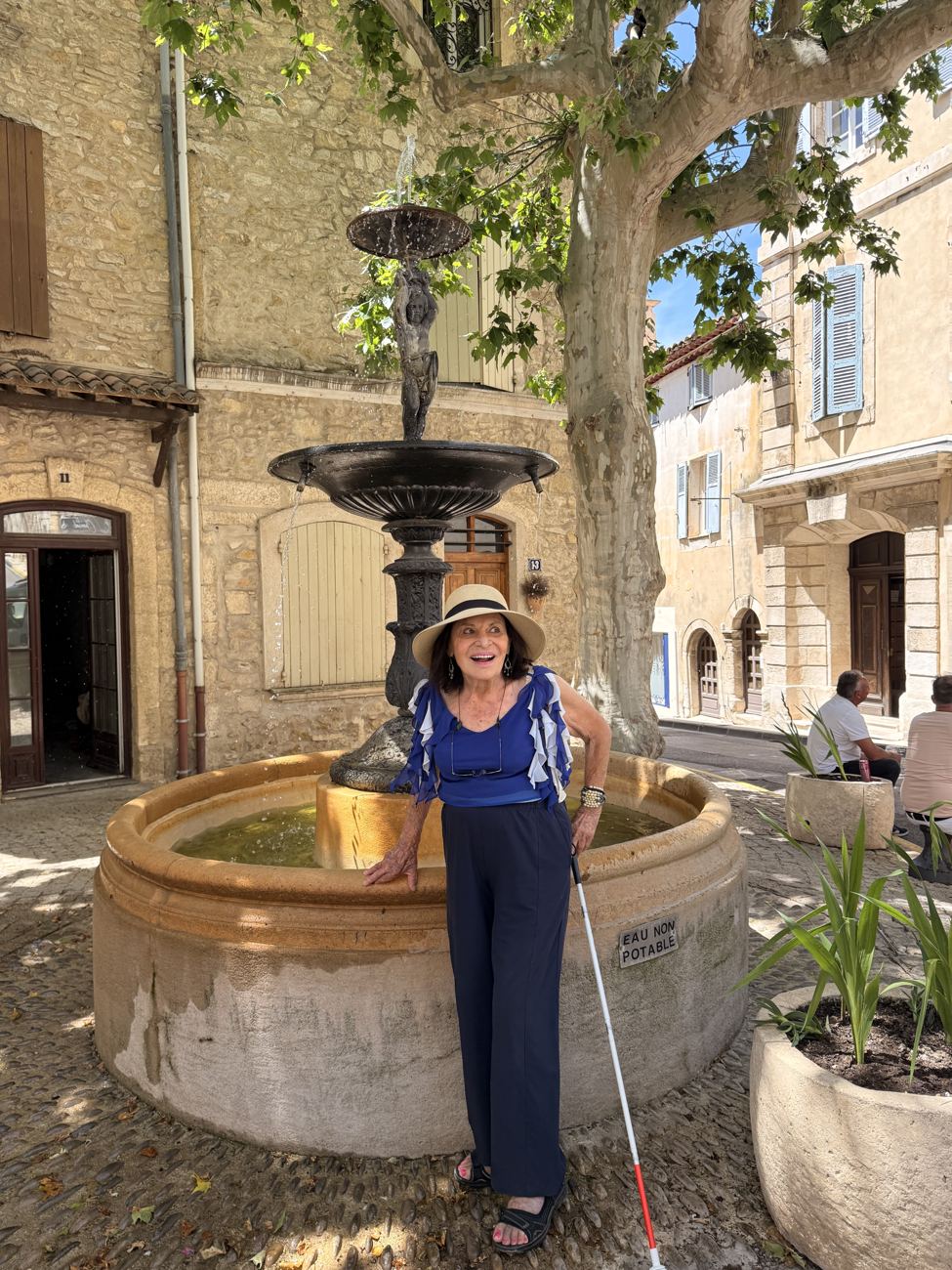
The old fountain, Lançon-de-Provence — where the village still gathers in the shade of the planes.La vieille fontaine, Lançon-de-Provence — là où le village se retrouve encore à l’ombre des platanes.
She was born to this rock. Eighty years on, the rock remembered her back.Elle est née de ce rocher. Quatre-vingts ans plus tard, le rocher, lui, s’est souvenu d’elle.
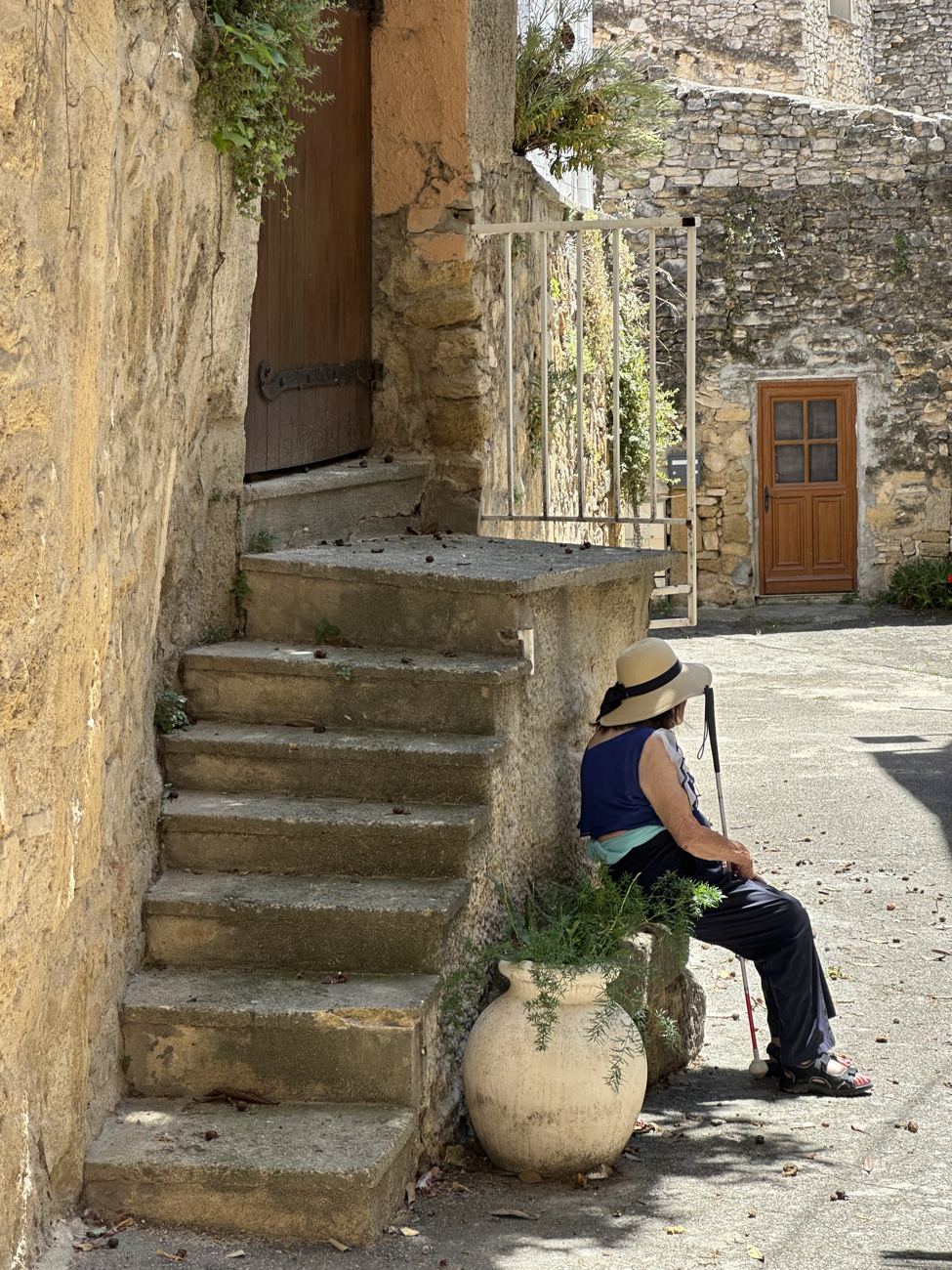
Lançon sits on a spur of pale stone above the plain, between Salon and the étang, the kind of village that looks as though it grew out of the hill rather than being set upon it. The old château crowns the top in ruins; the lanes fall away from it in steps and shadow. This is where Maman comes from — and we climbed it slowly in the late-morning heat, because there was no other way to climb it, and because she wanted to look at everything twice.Lançon tient sur un éperon de pierre claire au-dessus de la plaine, entre Salon et l’étang, un de ces villages qui semblent avoir poussé de la colline plutôt que d’y avoir été posés. Le vieux château en ruine en couronne le sommet ; les ruelles en descendent par marches et par ombres. C’est d’ici que vient Maman — et nous y sommes montés lentement dans la chaleur de fin de matinée, parce qu’il n’y avait pas d’autre façon d’y monter, et parce qu’elle voulait tout regarder deux fois.
She did not announce the village so much as recognise it. A doorway, a turn in the wall, the particular grey of a shutter that had been that grey for longer than any of us had been alive — she would stop, and the rest of us would stop with her, and wait to see what the stone would give back.Elle ne nous annonçait pas le village, elle le reconnaissait. Une porte, un coude dans le mur, le gris très précis d’un volet qui était de ce gris-là depuis plus longtemps qu’aucun de nous n’était en vie — elle s’arrêtait, et nous nous arrêtions avec elle, et nous attendions de voir ce que la pierre allait rendre.
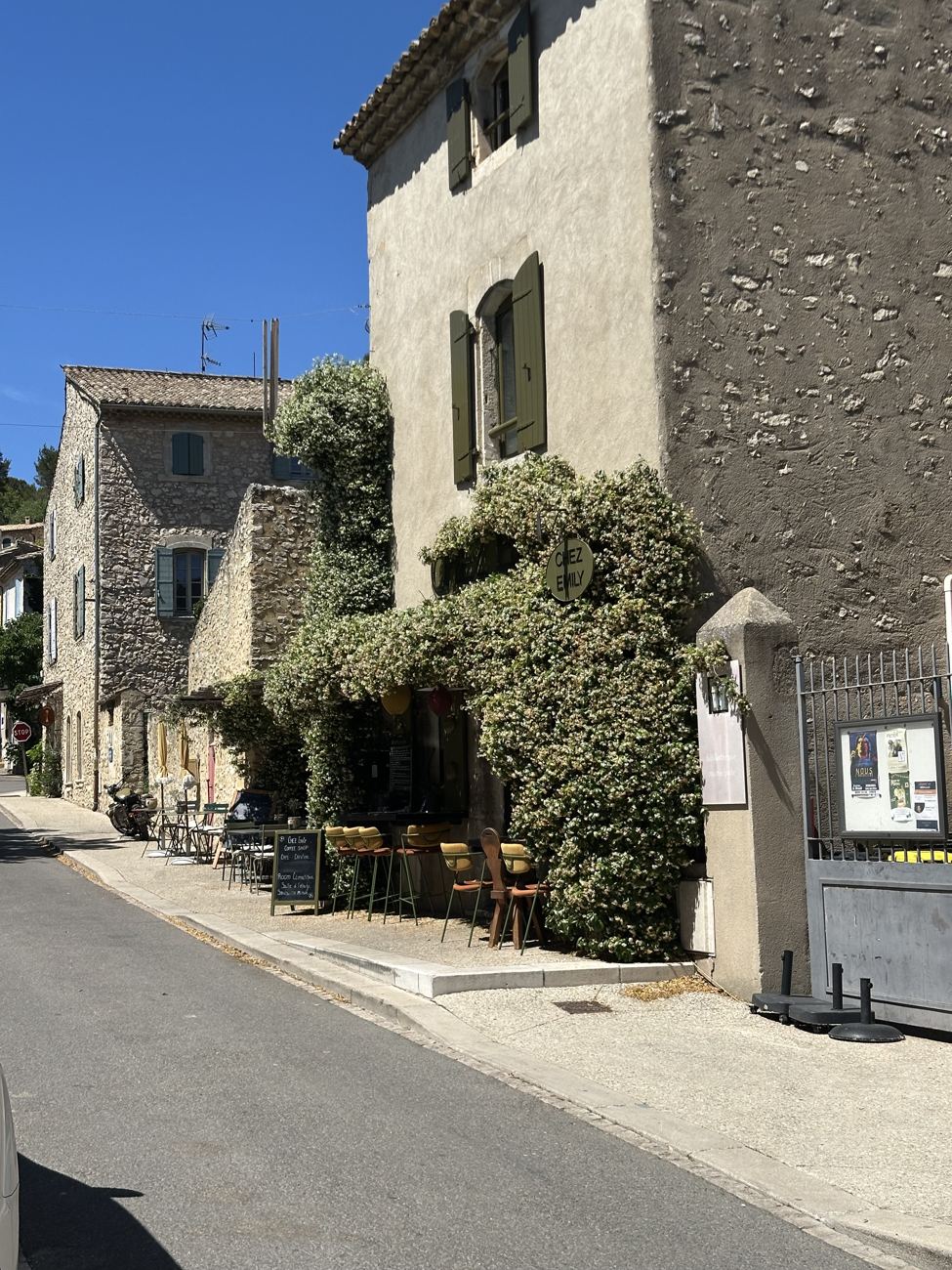
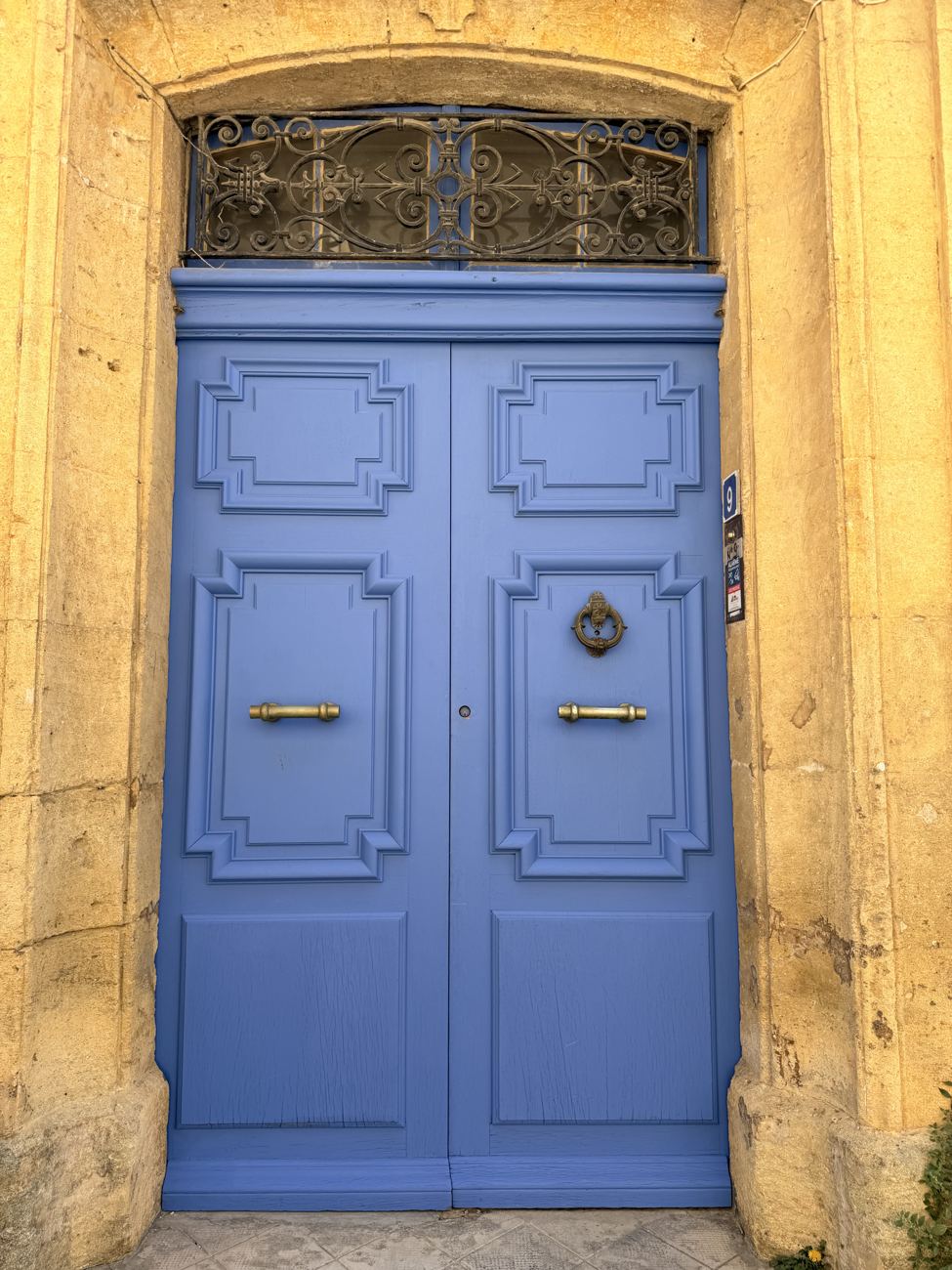
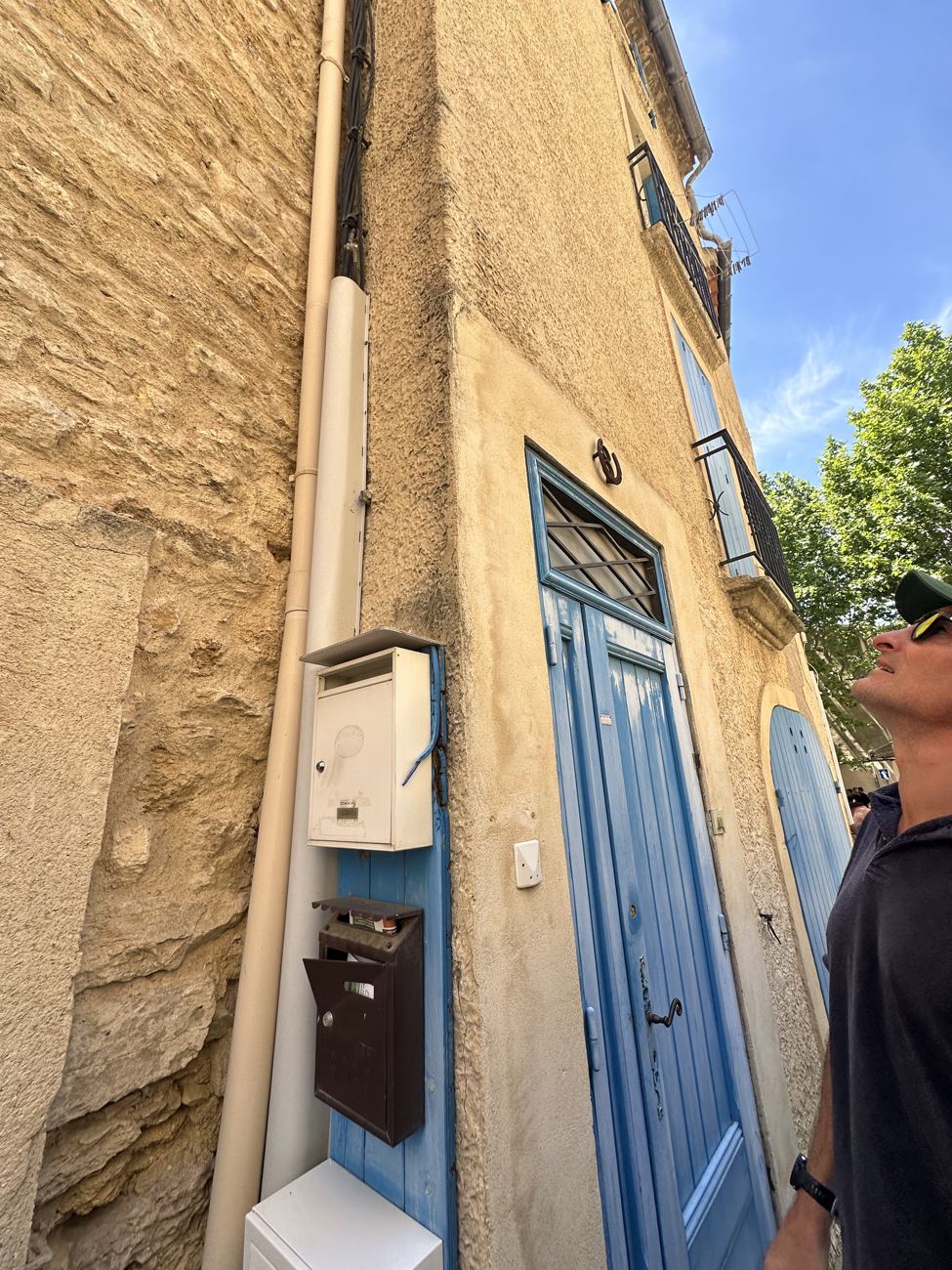
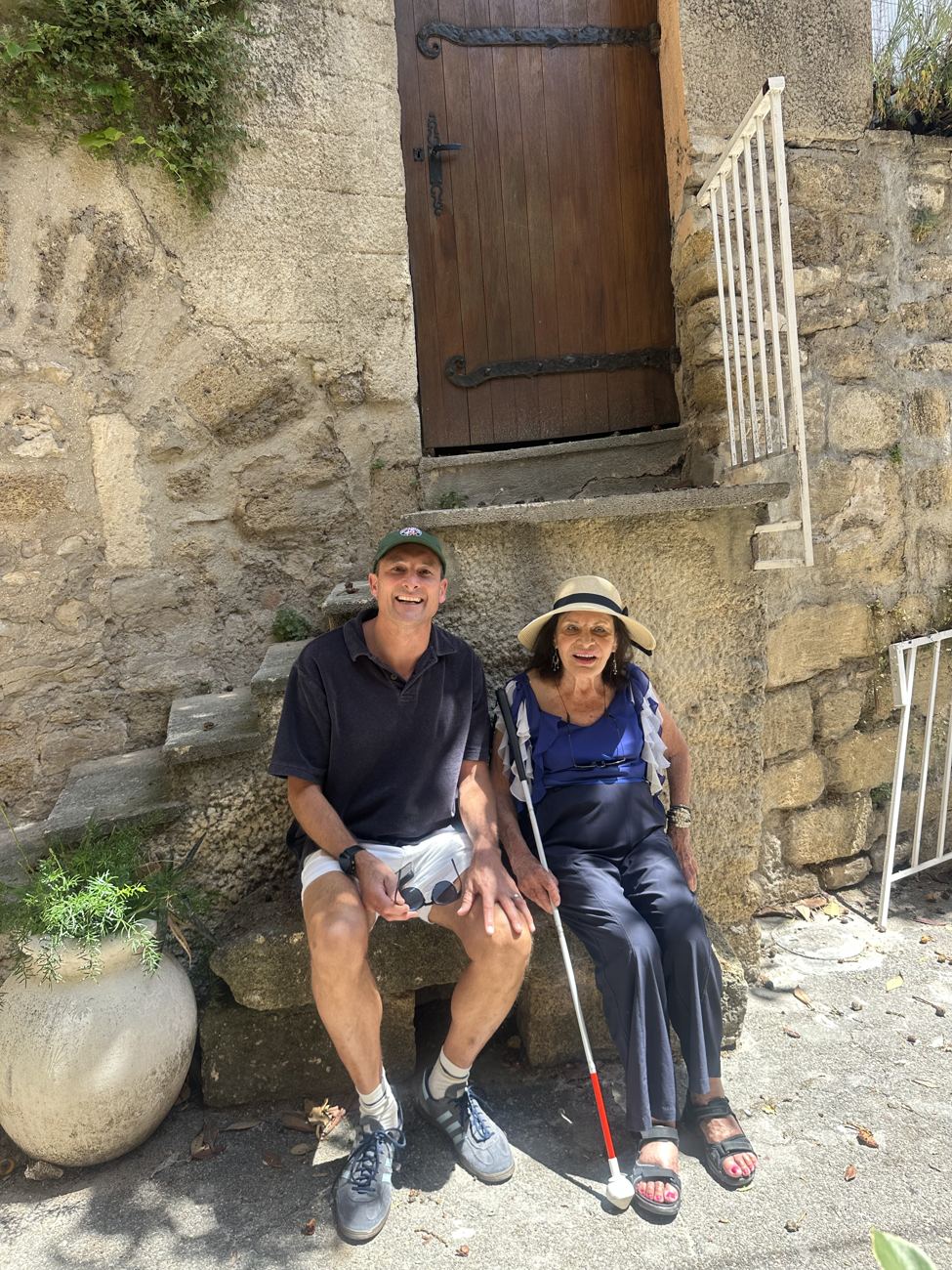
Everywhere the same two colours: the honey of the stone and, set into it, a blue — doors, shutters, a railing — that the Midi keeps for itself. We followed the lanes wherever they narrowed, up worn steps polished by centuries of feet, past a small fountain, to a bench in the shade where two of us sat and let the others go on ahead.Partout les deux mêmes couleurs : le miel de la pierre et, serti dedans, un bleu — portes, volets, une rampe — que le Midi garde pour lui. Nous avons suivi les ruelles partout où elles se rétrécissaient, gravi des marches usées, polies par des siècles de pas, dépassé une petite fontaine, jusqu’à un banc à l’ombre où deux d’entre nous se sont assis et ont laissé les autres continuer.
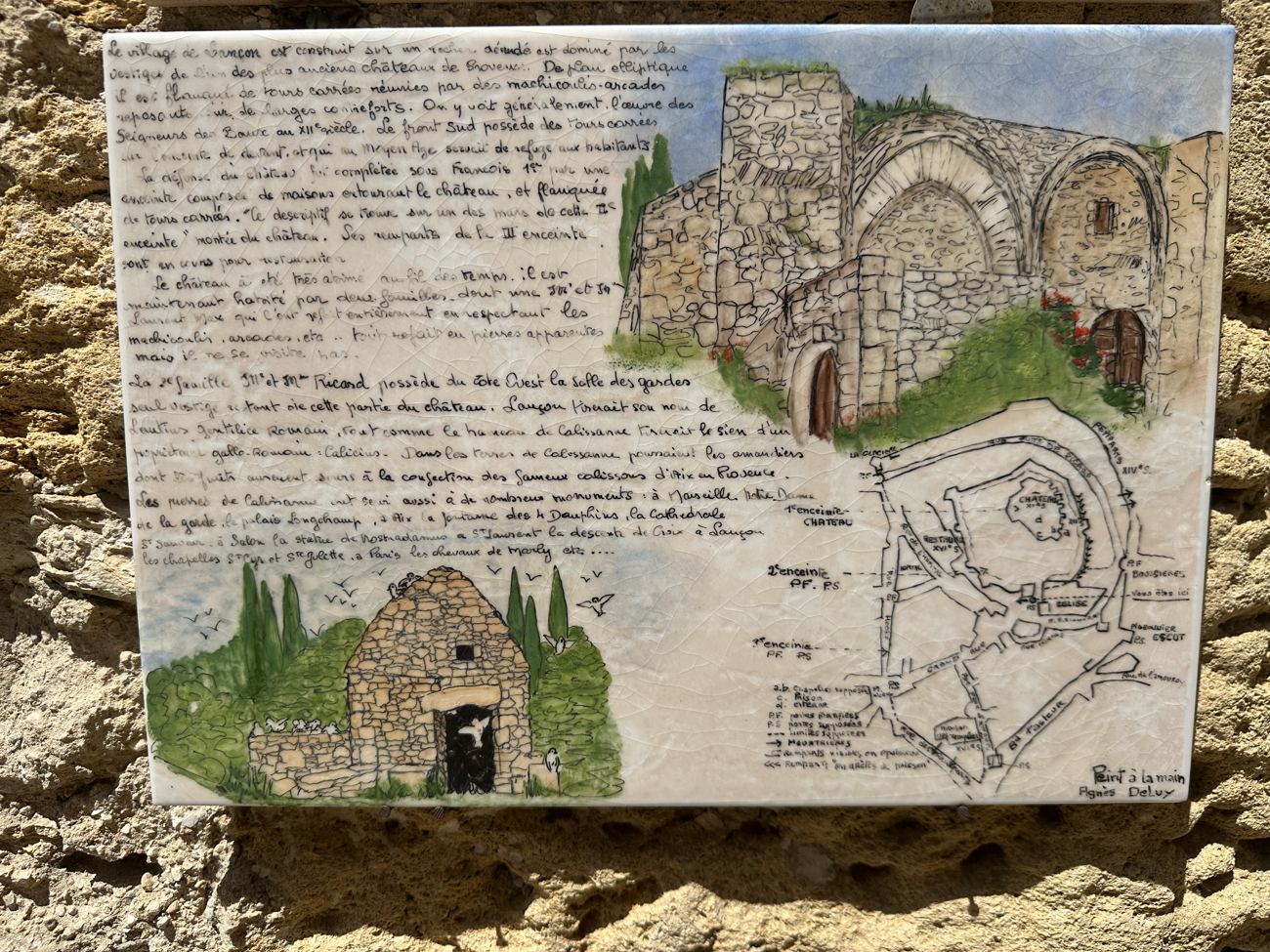
It was on these walls that we found the village telling its own story. Lançon has set hand-painted panels into the stone — little watercolours of the château as it once stood, a map of the old fortified town, and a poem, titled simply Lançon, written out in a careful sloping hand. The village had written itself a memory, and hung it where the light could reach it.C’est sur ces murs que nous avons trouvé le village en train de raconter sa propre histoire. Lançon a scellé dans la pierre des panneaux peints à la main — de petites aquarelles du château tel qu’il se tenait autrefois, un plan de la vieille ville fortifiée, et un poème, intitulé simplement Lançon, recopié d’une écriture penchée et soignée. Le village s’était écrit une mémoire, et l’avait accrochée là où la lumière pouvait l’atteindre.
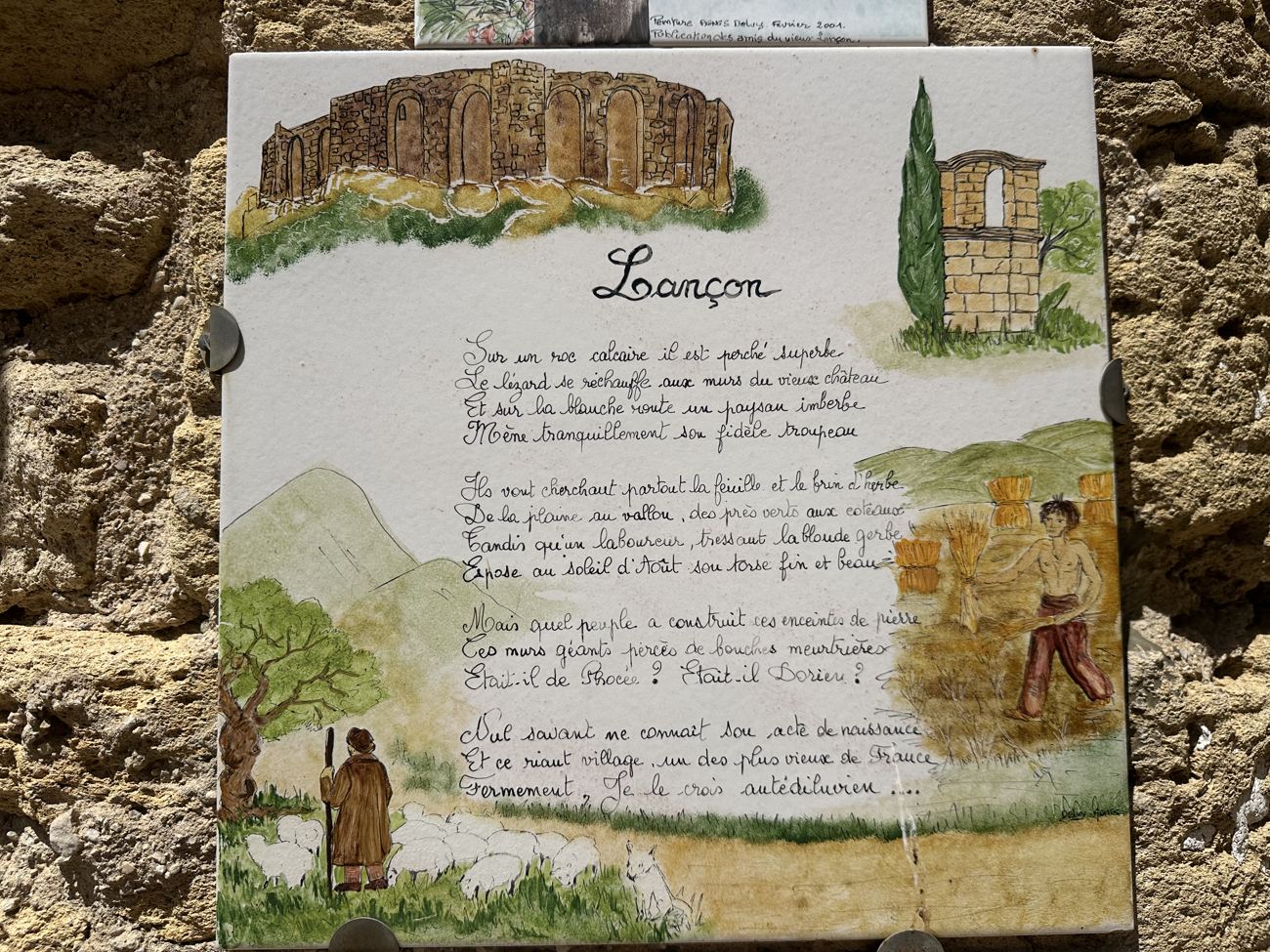
On its limestone rock it perches, and it perches magnificently.
The lizard takes his warmth from the old château wall,
and along the white road a boy too young to shave
walks his faithful flock, in no particular hurry.
They go looking everywhere for a leaf, a blade of grass,
from the plain to the valley, from green meadow to hillside,
while a ploughman, binding the pale gold sheaf,
turns to the August sun a torso lean and handsome.
But what people built these walls of stone,
these giant ramparts pierced with murder-holes?
Was he out of Phocaea? Was he a Dorian?
No scholar has ever found its certificate of birth.
And this laughing village, one of the oldest in France —
I firmly believe it older than the Flood…Sur un roc calcaire il est perché superbe
Le lézard se réchauffe aux murs du vieux château
Et sur la blanche route un paysan imberbe
Mène tranquillement son fidèle troupeau
Ils vont cherchant partout la feuille et le brin d’herbe
De la plaine au vallon, des prés verts aux coteaux
Tandis qu’un laboureur, tressant la blonde gerbe
Expose au soleil d’Août son torse fin et beau
Mais quel peuple a construit ces enceintes de pierre
Ces murs géants percés de bouches meurtrières
Était-il de Phocée ? Était-il Dorien ?
Nul savant ne connaît son acte de naissance
Et ce riant village, un des plus vieux de France
Fermement, je le crois antédiluvien…
Painted on the panel in the lane, in somebody’s careful hand. The French is transcribed as written; the English is ours.Peint sur le panneau de la ruelle, d’une main appliquée. Le français est transcrit tel quel.
Somewhere among the lanes the talk turned to old blue glass — the granddaughter’s observation, drawn from somewhere half-remembered: that the old makers knew how to fire a blue so true that, once a pane was broken, no one could ever make that same blue again. It seemed to belong to the place. So much of Lançon is exactly that — a colour you could not reproduce if you tried.Quelque part dans les ruelles, la conversation est venue sur le vieux verre bleu — une remarque de la petite-fille, tirée d’un souvenir à moitié perdu : que les verriers d’autrefois savaient cuire un bleu si juste qu’une fois la vitre brisée, personne n’a jamais pu refaire ce bleu-là. Cela semblait appartenir à l’endroit. Il y a tant de cela dans Lançon — une couleur qu’on ne saurait refaire, même en essayant.
The recorder was running as we walked. She did not narrate the village so much as keep returning the same quiet verdict to the land around her — the lanes, the light, the stone. These lines are reconstructed from that recording, tidied only enough to read.L’enregistreur tournait pendant que nous marchions. Elle ne commentait pas le village, elle rendait sans cesse le même verdict tranquille au pays autour d’elle — les ruelles, la lumière, la pierre. Ces lignes sont reprises de cet enregistrement, remises en ordre juste ce qu’il faut pour se lire.
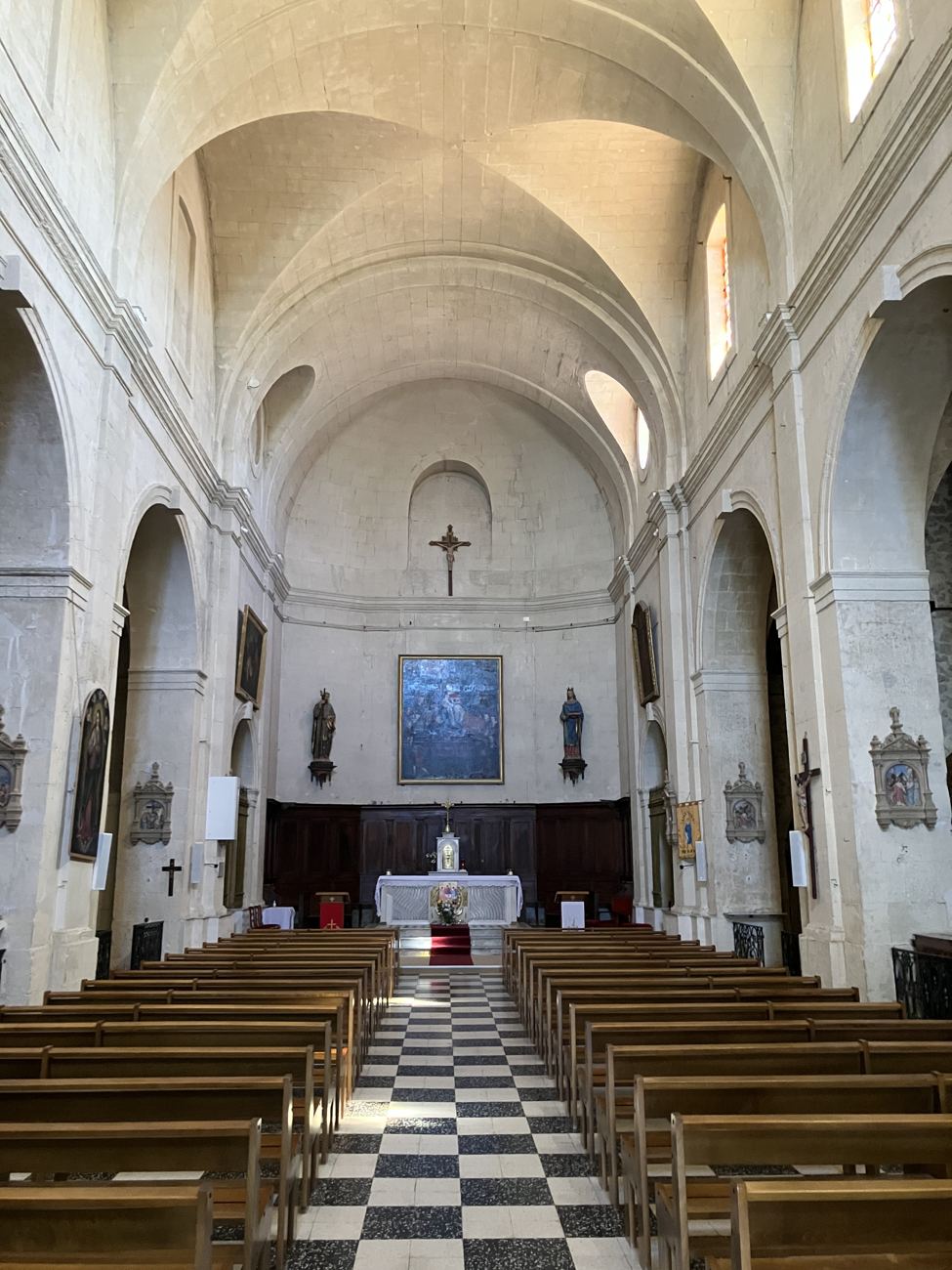
Below the lanes, the village keeps its church — cool and plain inside, a chequered floor running down to a quiet altar, the heat shut out at the door. Maman’s people lived their lives within sound of its bell; the family house, by all accounts, still stands across from it. We stood a while in the stone hush, which is a kind of remembering, and then went back out into the white afternoon.En contrebas des ruelles, le village garde son église — fraîche et nue à l’intérieur, un dallage en damier qui descend vers un autel silencieux, la chaleur laissée à la porte. Ceux de Maman ont vécu leur vie à portée de sa cloche ; la maison de famille, à ce qu’on dit, est toujours là en face. Nous sommes restés un moment dans ce silence de pierre, qui est une façon de se souvenir, puis nous sommes ressortis dans l’après-midi blanc.
She had come a very long way to climb a small hill. It did not seem small to any of us by the time we reached the top.Elle était venue de très loin pour monter une petite colline. Arrivés en haut, aucun de nous ne la trouvait plus petite.
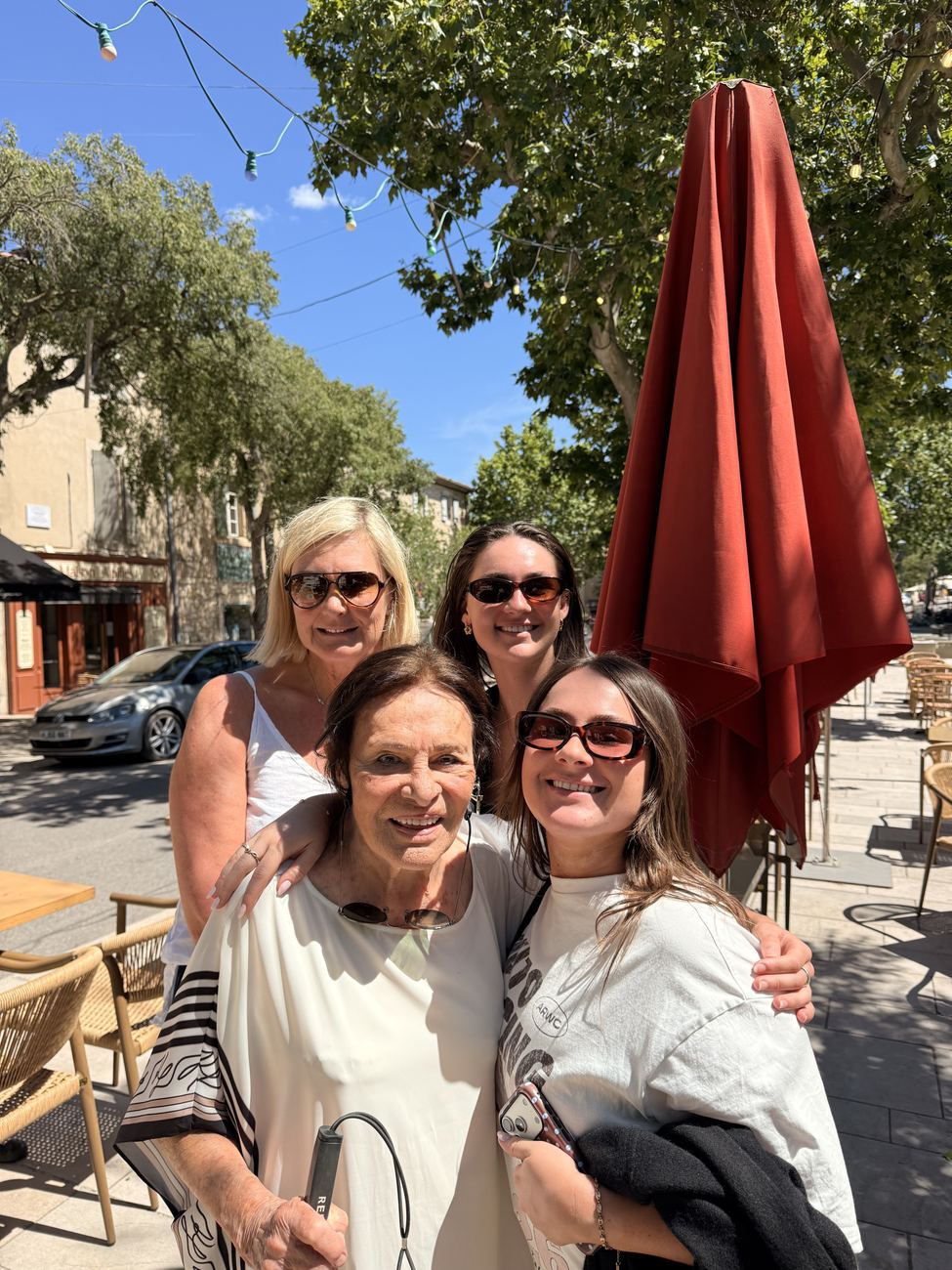
Some places make us; a few will still know us when we come back. Lançon knew her.Certains lieux nous font ; quelques-uns nous reconnaissent encore quand nous revenons. Lançon l’a reconnue.