Carnet de Provence — une chronique de famille
Chapitre III
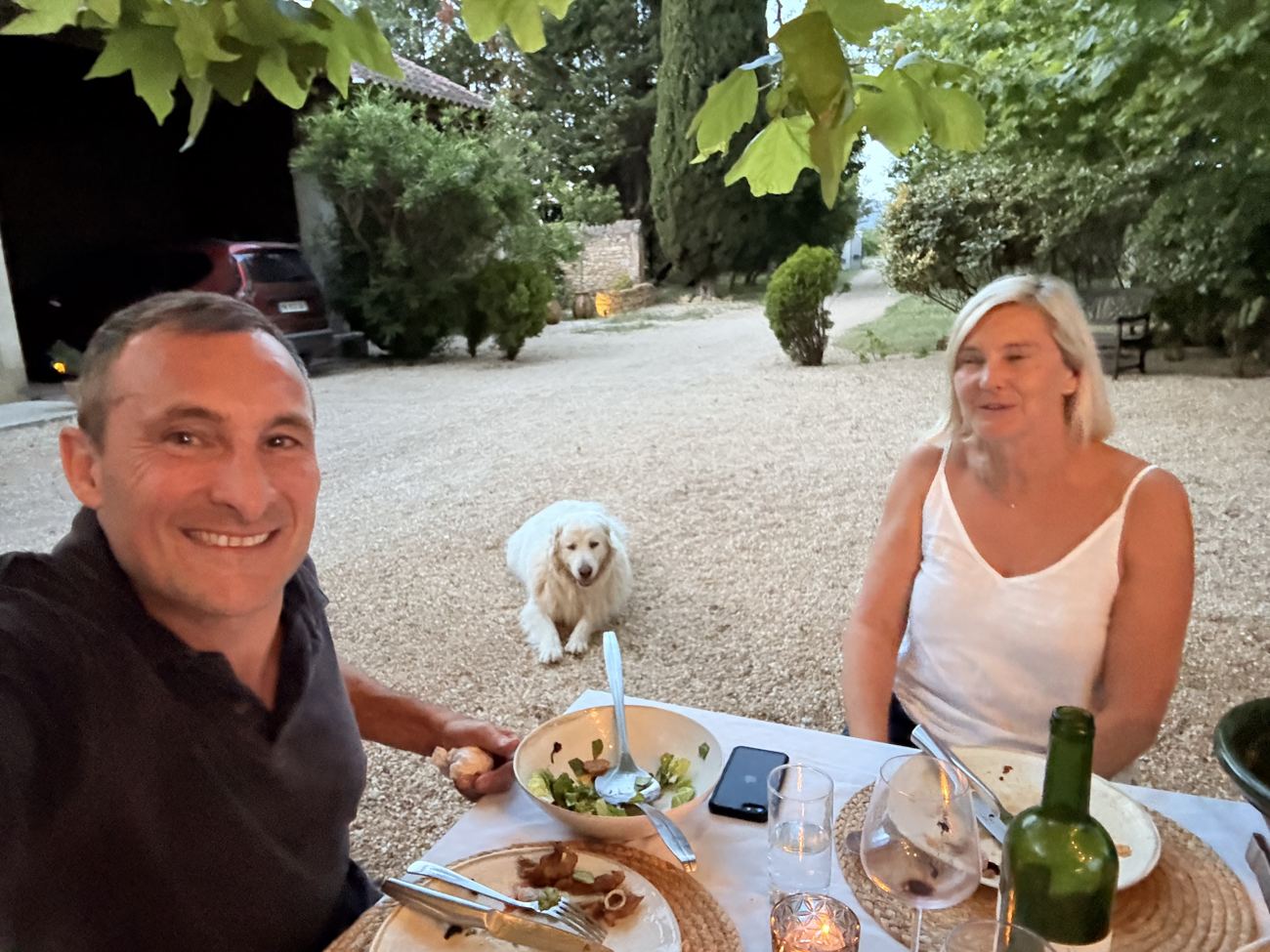
A long table under the planes — pâté de campagne, tomato tapenade, a white dog, and the woman’s card.Une longue table sous les platanes — du pâté de campagne, de la tapenade de tomates, un chien blanc, et la carte de dame.
At table, in Provence · 1 June 2026À table, en Provence · le 1er juin 2026
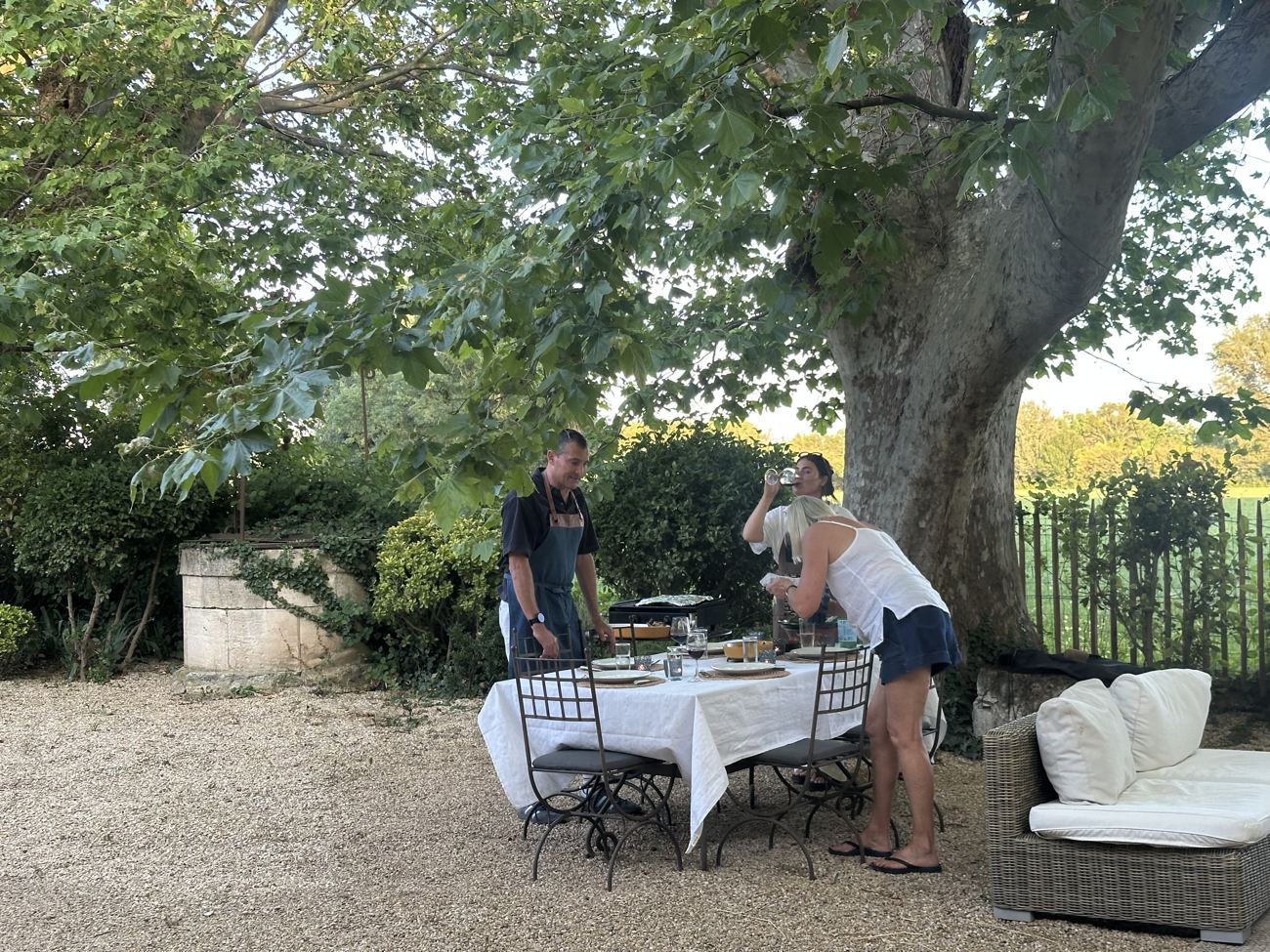
The table laid under the planes — where, in Provence, the day finally arrives.La table dressée sous les platanes — c’est là qu’en Provence la journée finit par arriver.
In Provence the table is not where the day pauses. It is where the day arrives.En Provence, la table n’est pas l’endroit où la journée s’interrompt. C’est l’endroit où elle arrive.
The table was set in the open, in the green shade of the planes, and the meal had the particular unhurriedness of a place that has never once believed that lunch should be brief. Plates came as they were ready and not before. Ça arrive, mais il faut que ça chauffe — it’s coming, but it has to heat through — and no one minded, because the wine had already come, and the company was the point.La table était mise dehors, dans l’ombre verte des platanes, et le repas avait cette lenteur particulière des endroits qui n’ont jamais cru un seul instant qu’un déjeuner devait être bref. Les plats arrivaient quand ils étaient prêts, pas avant. Ça arrive, mais il faut que ça chauffe — et personne ne s’en formalisait, parce que le vin, lui, était déjà arrivé, et que l’essentiel, c’était d’être ensemble.
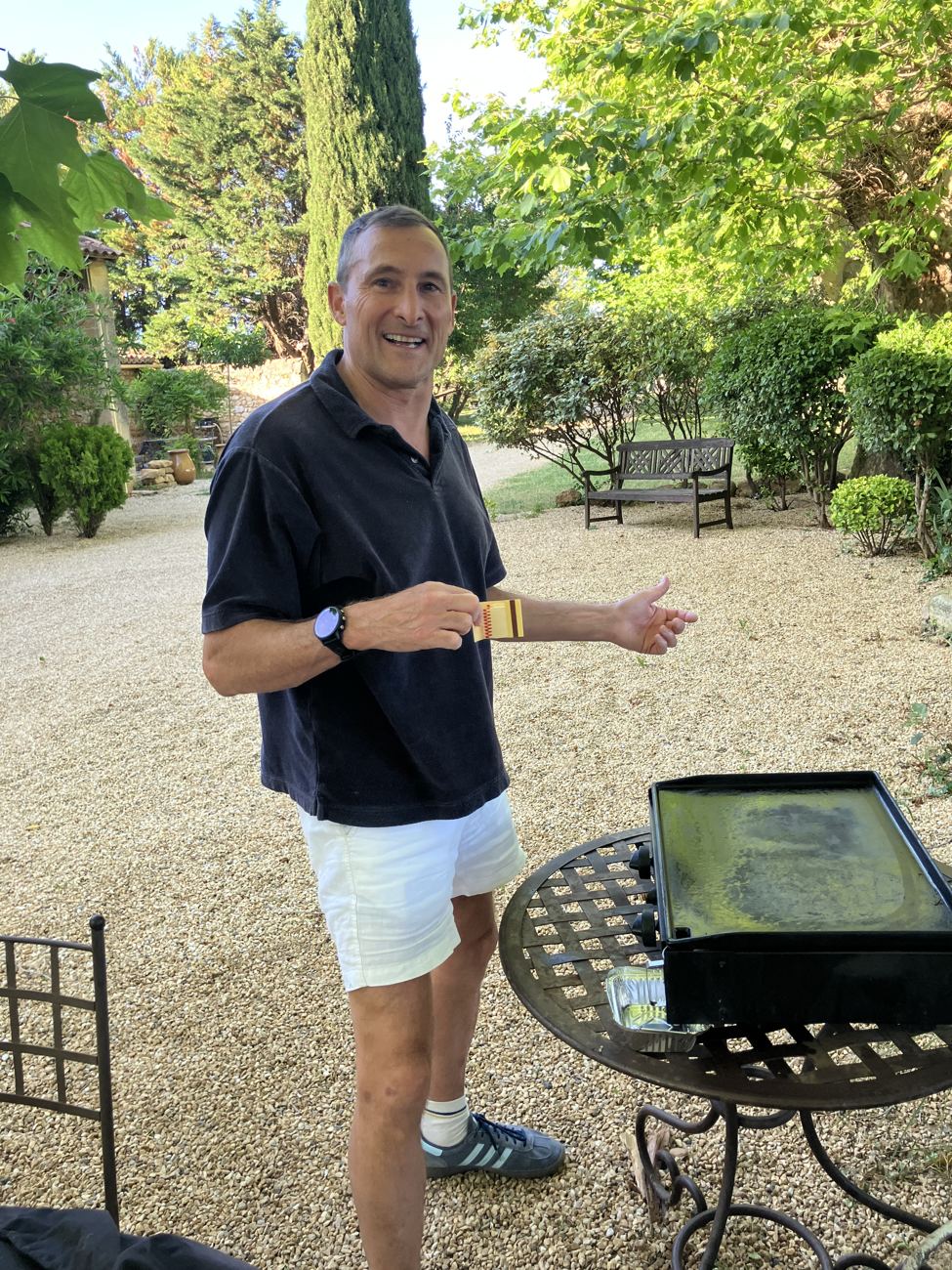
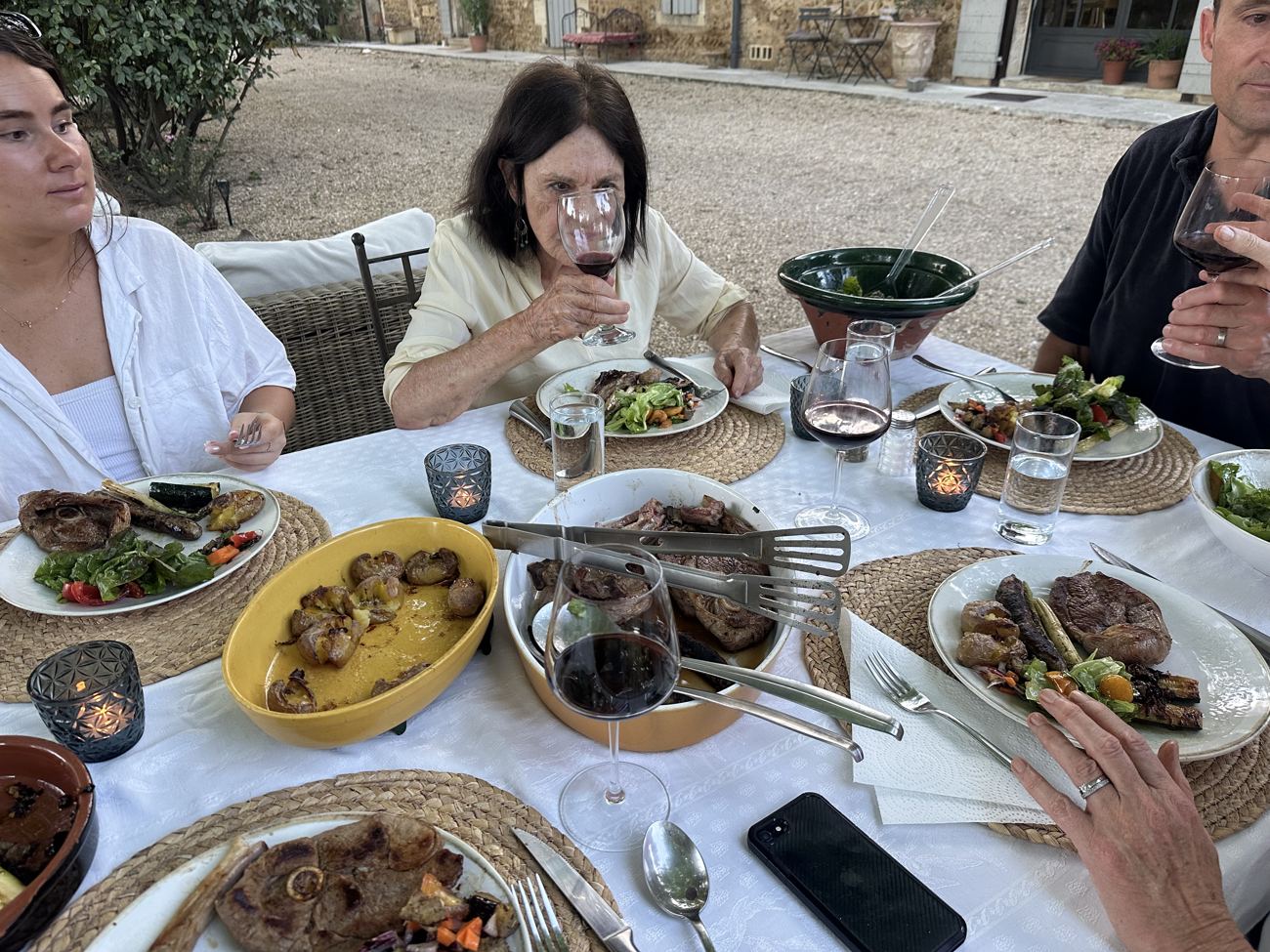
What arrived, in time: a green salad of small spinach leaves; tomatoes with burrata; a little pâté de campagne with its two tartines; jamón Serrano; a tomme d’Abondance melted soft, with a spoon of tomato tapenade laid over the top — the kind, the patron told us, he makes himself, at home. Everything was to be shared. Elle le partage — pass it round — there’s more coming anyway.Ce qui est arrivé, avec le temps : une salade verte de jeunes pousses d’épinards ; des tomates à la burrata ; un peu de pâté de campagne avec ses deux tartines ; du jambon Serrano ; une tomme d’Abondance fondue, bien coulante, avec une cuillerée de tapenade de tomates posée dessus — celle que le patron, nous a-t-il dit, fait lui-même, chez lui. Tout était à partager. Elle le partage — on fait tourner — de toute façon, il en arrive encore.
There was a small negotiation over Maman’s plate, conducted with the seriousness Provence reserves for food. The dish would have had pork in it; the pork was quietly taken out. C’est pas bon pour l’estomac — not good for the stomach — and so it was done, without fuss, the way a family handles the small accommodations that keep an elder at the centre of the table rather than apart from it. She approved of the salad. She approved of it twice.Il y a eu une petite négociation autour de l’assiette de Maman, menée avec le sérieux que la Provence réserve à la nourriture. Le plat devait contenir du porc ; on a retiré le porc, discrètement. C’est pas bon pour l’estomac — et c’est ce qu’on a fait, sans discuter, comme une famille règle les petits arrangements qui gardent une aînée au centre de la table plutôt qu’à l’écart. Elle a approuvé la salade. Elle l’a approuvée deux fois.
Somewhere between courses the talk turned, as it does, to old scrapes — a parking ticket, a dog that should have been on its lead, a teenager with a freshly minted diploma and no money pleading for the whole thing to be just a lesson. And there is, the family agreed, an expression for the way Maman has always got herself out of exactly this sort of trouble: jouer la carte de dame — to play the woman’s card. Follow me, she’ll say to whoever is panicking, and somehow the official softens, and the matter dissolves. She has been doing it, by all accounts, for the better part of a century.Entre deux plats, la conversation a dérivé, comme toujours, vers les vieilles bêtises — une contravention, un chien qui aurait dû être tenu en laisse, un adolescent tout juste diplômé et sans un sou suppliant qu’on en reste à la leçon. Et il y a, la famille en est tombée d’accord, une expression pour la manière dont Maman s’est toujours tirée exactement de ce genre d’ennuis : jouer la carte de dame. Suis-moi, dit-elle à celui qui panique, et l’agent s’adoucit, allez savoir comment, et l’affaire se dissipe. Elle fait ça, à ce qu’on raconte, depuis près d’un siècle.
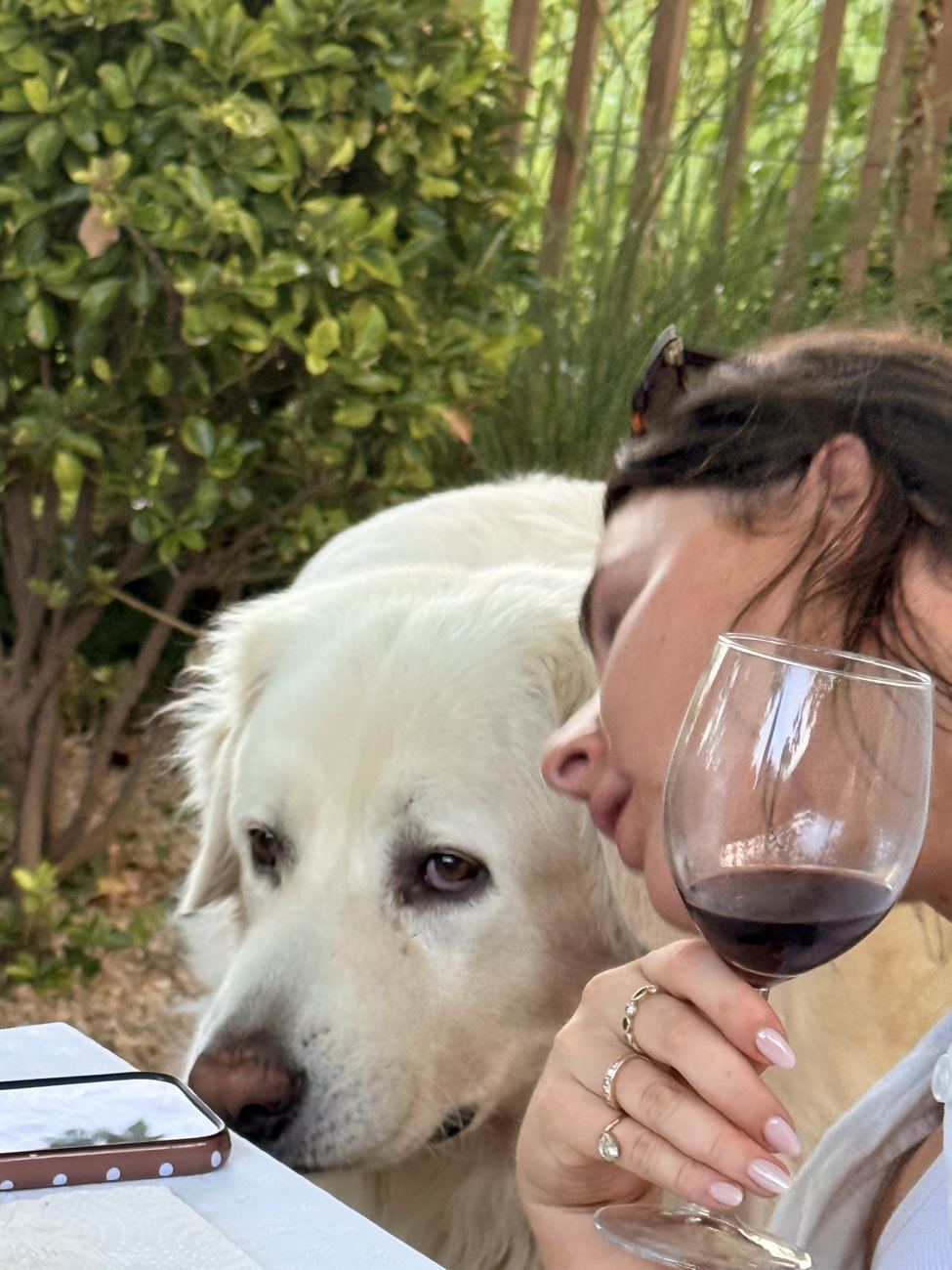
A perfumer’s habit, perhaps: at a table she was forever asking what a thing was, and then pronouncing on it. These are reconstructed from the recording, cleaned only enough to read.Une habitude de parfumeuse, peut-être : à table, elle demandait toujours ce que c’était, puis elle tranchait. Ce qui suit a été reconstitué à partir de l’enregistrement, juste assez nettoyé pour se lire.
By the time the cheese was gone the light had gone long through the planes, and the table had done what a good table does: turned a group of people into a family for an afternoon. There was an embrace under the tree — three of us, two generations folded into one — and the kind of laughter that does not need a joke, only good food, good wine, and the certainty that no one is in any hurry to get up.Quand il n’est plus rien resté du fromage, la lumière s’était allongée à travers les platanes, et la table avait fait ce que font les bonnes tables : d’un groupe de gens, une famille, le temps d’un après-midi. Il y a eu une étreinte sous l’arbre — nous trois, deux générations serrées en une seule — et ce rire qui n’a pas besoin d’une blague, seulement d’un bon repas, d’un bon vin et de la certitude que personne n’est pressé de se lever.
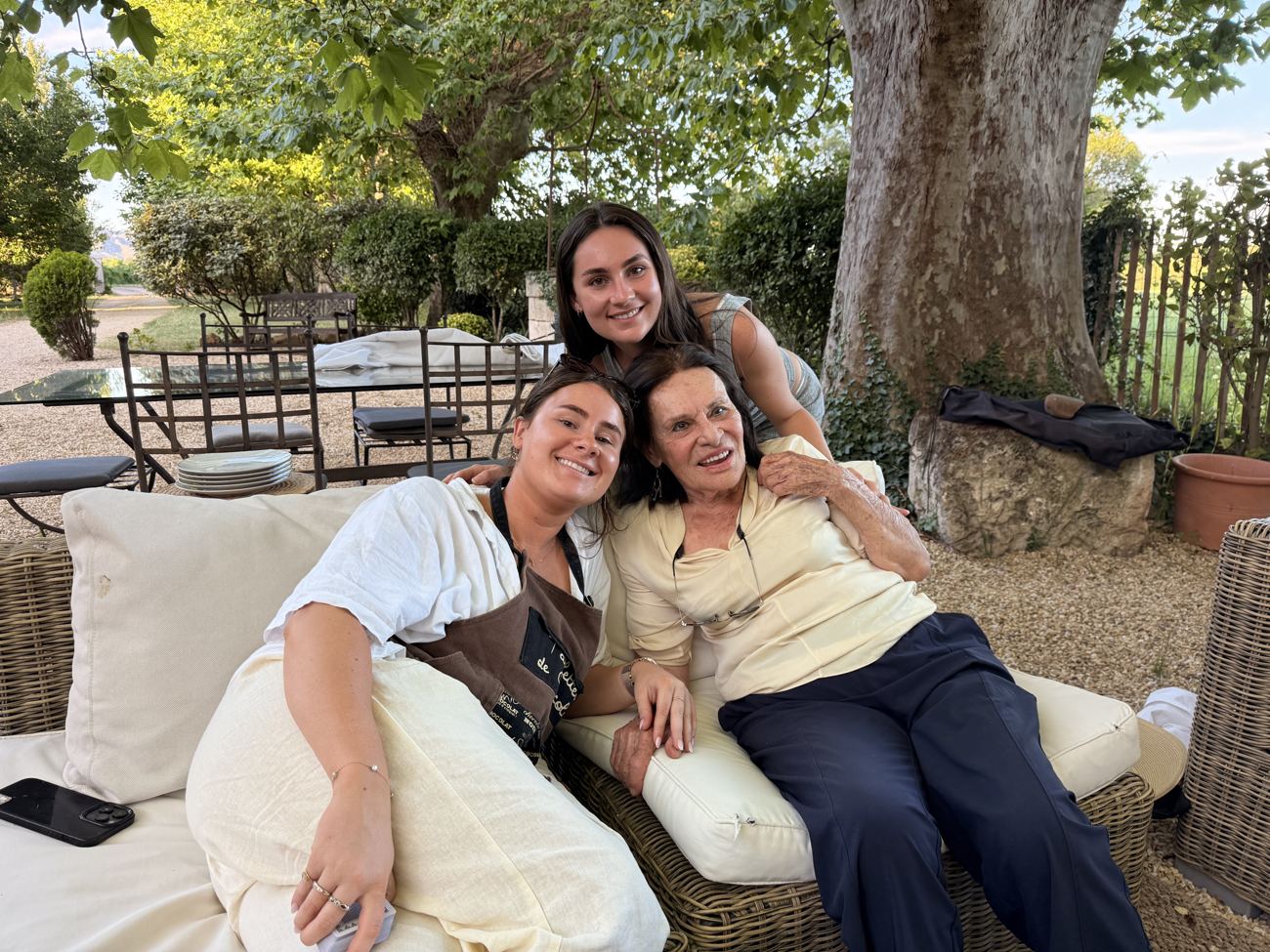
A long table, a slow afternoon, and everything passed from hand to hand. This is how Provence keeps a family fed.Une longue table, un après-midi qui traîne, et tout qui passe de main en main. C’est comme ça que la Provence nourrit une famille.